Capstone: A Company Offsite Planned Across Four Teams, Plus a Conformance Self-Check
Wire the modules from the first six days into one pipeline: four teams run their agents on their own ports, and the orchestrator discovers them by card, trusts them by signature, delegates through briefs, collects reports through contracts, and still hands back a report anyone can read at a glance when something fails. Then pick the must-level requirements out of the specification, turn them into a conformance self-check, compare it with the official conformance test kit, and look back over the seven days.
Today's Goals
- Can wire the seven days of modules into one complete planning run across four teams, and hand back a report that says who did what and where it failed
- Can pick the must-level requirements out of the specification and turn them into a conformance self-check, and explain what that self-check cannot cover
- Can compare function calling, MCP, Skills, A2A, and handoff in a single table, and say when you would advise someone not to build a multi-agent system at all
The last day does two things: run the first six days end to end as one pipeline, then ask a different question, namely how you prove that your hand-built server actually follows the specification. When you finish, come back to the top and check off the three goals.
Plain-Language Walkthrough
A day in the life of the offsite lead
The day before the annual company offsite, the lead's day goes like this. First thing, verify the four contractors: is the company on each business card real, and is it really them on the phone? Then send out work in order: settle the venue first, then notify catering, the coach company, and the accountant at the same time, each with a note that spells out what is already settled and which constraints come with it. Through the afternoon the answers come back, each with its supporting facts and a date. By evening the coach company cannot be reached, and the report to the boss says so: transport is open because the coach company cannot be reached, and the other three items are settled.
Nothing in that day is new. Verifying who you are dealing with is Day 5. The note is Day 2, and answers with supporting facts are Day 2 as well. Sending and following up is Days 3 and 4. Delivering when one contractor falls through is Day 6. Today you connect them, and answer the question the lead will eventually be asked too: what makes you say this process follows the rules?
"I followed the specification" is not an answer. Rules have to be checkable one by one, and ideally someone else's ruler should measure you once as well. Today uses both.
Sign in, then link your WeChat mini program account on the account page. Linked accounts share one free article per day. Unlock additional articles with rewarded videos in the mini program.
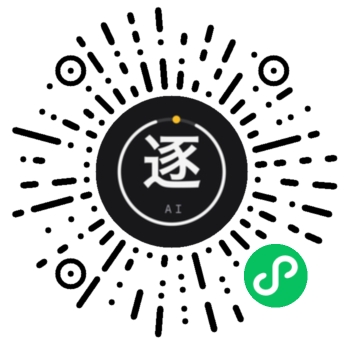
Scan in WeChat to open Dayward AI. Open the same course and chapter, choose the rewarded video, then refresh this page after completion.
Interview questions
Design a system where four teams each own an agent and must cooperate to plan an event. How would you handle discovery, trust, fault tolerance, and observability?设计一个系统:四个团队各有一个 Agent,要协作完成一次活动筹备。你会怎么设计发现、信任、容错与观测?
Common in ChinaCommon overseasDeep dive#multi-agent#a2a#system-design🔒 Unlock this chapter to see the answer keys.
How would you prove that your A2A implementation conforms to the specification?你怎么证明自己写的 A2A 实现是合规的?
Common in ChinaCommon overseasDeep dive#a2a#conformance#testing🔒 Unlock this chapter to see the answer keys.
After a multi-agent system goes live, where does it usually break first?多 Agent 系统上线之后,最先坏的通常是哪里?
Common in ChinaCommon overseasIntermediate#multi-agent#reliability#debugging🔒 Unlock this chapter to see the answer keys.
When would you advise someone not to build a multi-agent system?什么情况下你会建议对方不要做多 Agent?
Common in ChinaCommon overseasIntermediate#multi-agent#architecture-decision#cost🔒 Unlock this chapter to see the answer keys.